
 Facebook
 X
X
 Pinterest
 Copy Link
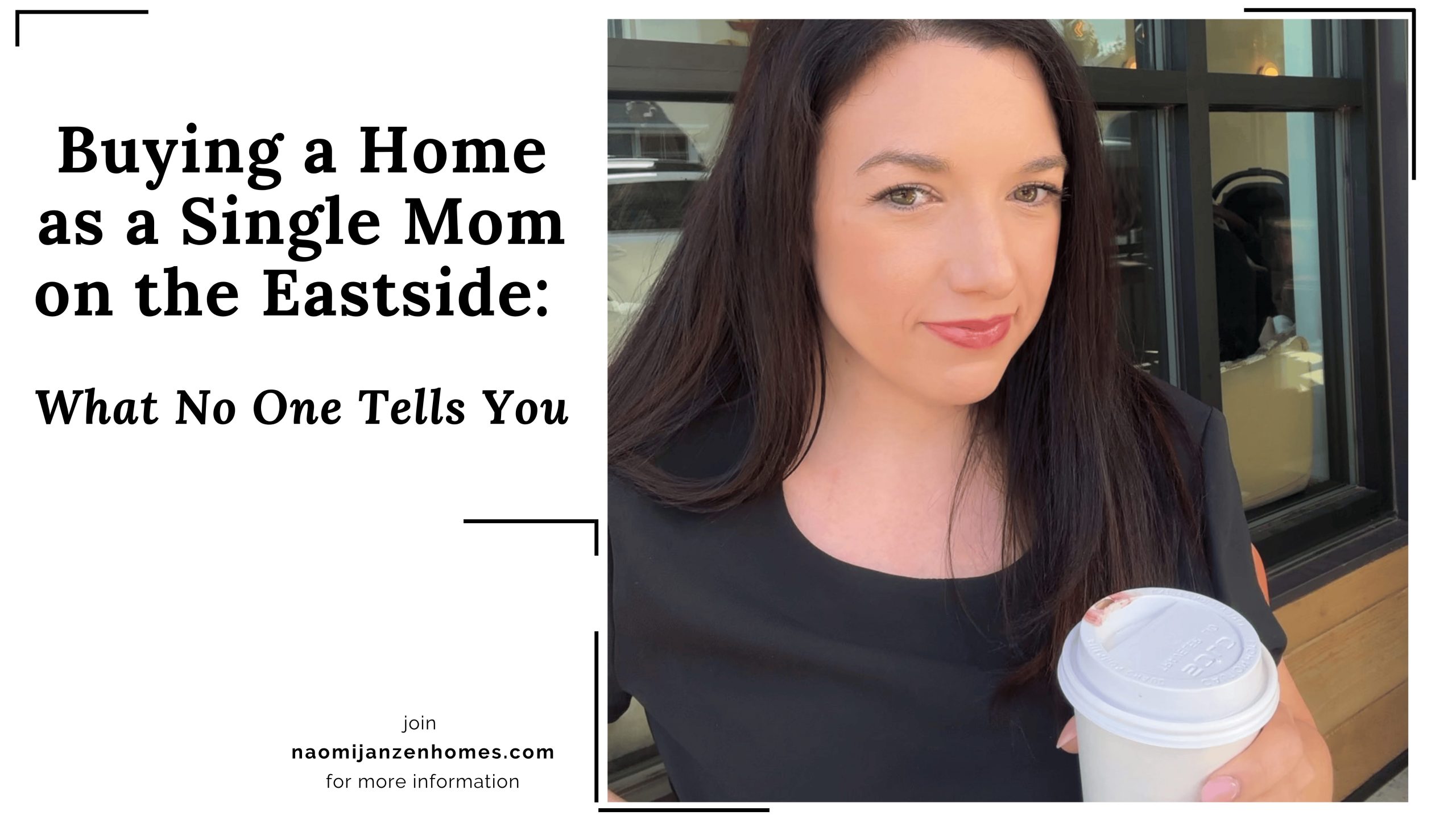
If you’re a single mom thinking about buying a home in Kirkland, Bellevue, or anywhere on the Eastside, there’s a moment that almost everyone hits. It usually happens late at night, when the kids are asleep and the house is finally quiet. You might have a spreadsheet open, Zillow on your phone, maybe an email from a lender pulled up. And then the question comes in, quietly but persistently: Can I actually do this on my own?
Not in theory. Not someday. Right now. If you’ve asked yourself that question—even once—you’re exactly who this is for.
The first thing to understand is that buying a home as a single mom is not just a financial decision. It’s a psychological one. For most women I work with, this is the first time there isn’t a second opinion in the room, no shared income to lean on, no one else signing next to you. It’s just your name, your income, and your decision. That weight can make even a fully qualified, financially capable woman hesitate. I’ve seen women who absolutely can buy talk themselves out of it for months—sometimes years—because it feels like too much to carry alone. If that’s where you are, I want to be very clear: the hesitation you’re feeling is normal. It’s not a sign that you’re not ready.
One of the biggest misconceptions that keeps women stuck is the belief that you need two incomes to buy a home, especially in high-demand markets like Kirkland and Bellevue. That simply isn’t true. There are single women buying homes across the Eastside every day, many of whom assumed they couldn’t until they actually sat down and ran real numbers. There are loan programs that allow for lower down payments than most people expect, flexible credit requirements, and the inclusion of child support or alimony as qualifying income. There are also down payment assistance options that rarely get discussed in everyday conversations. This doesn’t mean everyone will qualify, but it does mean that assumptions are often far more limiting than reality. Before you decide you can’t buy, you need accurate information—not guesswork.
What I’ve found, though, is that the real barrier is rarely qualification. It’s confidence. When you’re buying alone, every decision feels amplified. What if you pick the wrong house? What if something goes wrong financially? What if you should have waited? Without someone sitting next to you to validate your thinking, it’s easy to stay in research mode. That’s why so many single moms spend months scrolling listings, watching the market, and waiting to feel “ready.” But here’s the shift that changes everything: ready is not a feeling. It’s a decision made with good information.
When we take the emotion down a notch and focus on strategy, the process becomes much more manageable. The first thing we look at is not your maximum approval—it’s your monthly payment comfort. Just because a lender says you can afford a certain number doesn’t mean that number fits your life. We look at your real expenses, your lifestyle, and your margin for the unexpected. Stability matters more than stretching, especially when you’re carrying everything on your own.
The second priority is location, but not in the way most people think about it. This isn’t about prestige or resale headlines. It’s about whether your home supports your daily life. That means proximity to school, commute time, access to childcare or support systems, and how easy your day-to-day actually feels. This is one of the reasons Kirkland is such a strong fit for many single moms. The walkability, the access to parks, the neighborhood feel, and the proximity of amenities all create a sense of ease that goes far beyond the house itself. You’re not just buying property—you’re buying a lifestyle that needs to function under real-life pressure.
The third piece is the home itself, and this is where expectations need to shift. You do not need the biggest house, the most updated finishes, or the version of “perfect” that shows up in curated online feeds. You need a home that works. That means a functional layout, a safe and supportive neighborhood, and a space that can evolve with you over time. In many cases, the smartest move is buying a home that isn’t perfect but is right. That distinction matters more than most buyers realize.
One of the reasons this process feels overwhelming is because many women are trying to solve everything at once. Budget, timing, location, future plans, and market conditions all get bundled into one massive decision. That’s enough to stop anyone in their tracks. Instead, we break it down. The first step is not buying a home. The first step is getting clarity. That might mean talking to a lender, reviewing your real numbers, or simply understanding what exists in your price range on the Eastside. There’s no commitment required at this stage. Just information. And once you have that, everything else becomes easier to navigate.
I wish more single moms understood that you don’t need to have everything figured out before you begin. You don’t need to feel fearless, and you don’t need to know exactly which house you’re going to buy. What you need is accurate information, a clear understanding of your options, and the right support to help you move through the process one step at a time. That’s it.
Because on the other side of this decision, what you gain is far more than a piece of property. You gain stability, predictability, and control over your environment. You start building equity instead of paying someone else’s mortgage. Your kids gain consistency—their own rooms, their own routines, a sense of home that doesn’t shift underneath them. And you gain something that’s harder to quantify but just as important: the confidence of knowing you did this on your own.
If you’ve been thinking about buying but haven’t taken action yet, I want you to hear this clearly. You are not behind. You are at the beginning of the process. And the smartest thing you can do right now is not rush—it’s get clear.
